HIST 100: Engineering The Past

  • Home
  • Syllabus
  • Schedule
  • Blog

Prownian analysis: Nick Mooney

January 22, 2016 by nickmooney 2 Comments

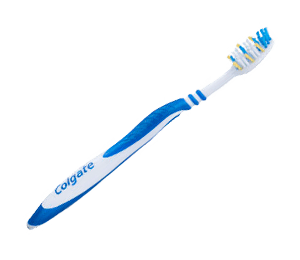
Description- Object is between 6-9 inches and roughly 1-2 inches in circumference. Made of a hard plastic material. One end has a flattened section measuring 1-1.5 inches with stiff bristles of varying colors and lengths. The other end has a rubber substance on the “bottom” of the item. Has no discernible temperature difference than the ambient air temperature.


Deduction- Item looks to be a tool of some sort. Possibly used for vanity. Could be used for very focused cleaning i.e. tile grout, in tight corners or inside of small necked bottles. Could also be used for hygiene purposes.


Speculation- I could see this item used by male and female people of all ages. Brushing small sections of hair like eyebrows.  I could see these individuals using this item to clean possibly teeth or under fingernails.  Based on the location of the item i could see this item being used to clean in very tight areas. Like getting in the grout between tiles in the shower or on the floor.  Could also clean the very tight locations on a toilet.


Questions-

Is there more than one use for this item?

Does the item need to be replaced often?

Has time and technology changed the usefulness or effectiveness of the item?


Colgate. “History Of Toothbrushes And Toothpastes.” History Of Toothbrushes And Toothpastes. N.p., n.d. Web. 22 Jan. 2016.

This article talks about the history of the toothbrush. The first toothbrushes date back to 3000 BC using frayed sticks. The Chinese are thought to have invented the first natural bristle design, with a bone or bamboo as the handle. This basic design didn’t change much until Du Pont invented nylon. The truly modern toothbrush was invented in 1938.


Wiegand, Annette and Burkhard, John and Eggmann, Florin and Attin, Thomas, “Brushing force of manual and sonic toothbrushes affects dental hard tissue abrasion,” Clinical Oral Investigations. Apr2013, Vol. 17 Issue 3, p815-822. 8p.

In this peer reviewed article, it has been found that if you are looking to do the least amount of damage to the enamel of your teeth, then you should use a electric sonic toothbrush. During the testing it was found that the most abrasive form of brushing is manually.

 

camanColgateWaveZigZag-ThumbProduct-Detail-Toothbrush-360-Enamel-Health

Filed Under: 02.1 Prownian Analysis, Group 4

Prownian Analysis

January 22, 2016 by elliejayo Leave a Comment

Prownian Analysis
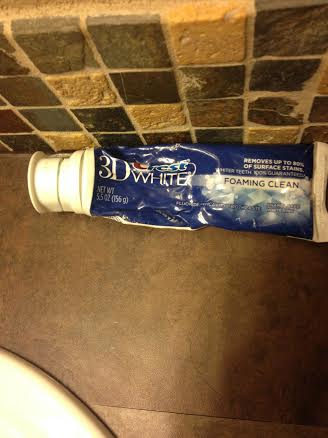
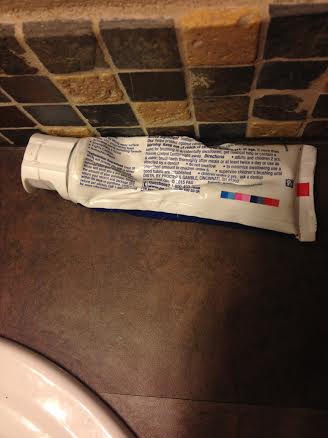
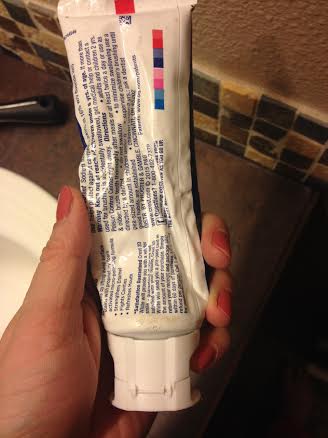
Description-This object is cold, and has a soft texture. This object is roughly 6 inches long and has a wrinkled look to it. The shatp 1

tp2

tp 3pe of this object has a rectangular body and a circular top. This object looks as though it is made out of a soft plastic.
Deduction-This product looks like it would be used for multiple different things. It looks as though people could use this for possible medical reasons. It looks as though it has something soft and a type of ointment inside of it. This could be used for medical reasons or hygiene purposes. This product looks like it belongs indoors and that a person would carry this with them possibly. Someone using this object could probably have it for a long time. It does not look like it would show wear and tear when someone is using it.
Speculate-Maybe this object would be used by someone who is a doctor or someone who could possibly be treating humans, or it may even be an animal product perhaps. This object could also be used for a household cleaner or used for something around the house rather than humans or animals.
Does anything about this product make one think that it is specifically for human use or could it be for animals as well?
What makes one think that this could be a medical assisting object, or hygiene?
Where could this product have possible came from?
Colgate. “History Of Toothbrushes And Toothpastes.” History Of Toothbrushes And Toothpastes. N.p., n.d. Web. 22 Jan. 2016.
It’s very possible that the history of this object could have rooted from China and India. Chinese were using toothpaste before the toothbrush was even around. Ox hoofs, egg shells, and ash were said to be some of the key ingredients in the first toothpastes. The author of this article helps readers understand three important things about this product. How, when, and why.
Basch, Corey H., Rodney Hammond, Alexis Guinta, Sonali Rajan, and Charles E. Basch. 2013. “Advertising of Toothpaste in Parenting Magazines”. Journal of Community Health : The Publication for Health Promotion and Disease Prevention. 38 (5): 911-914.
Unfortunately there is not a lot of history on tooth paste. Although this article does introduce some changes that have been made in toothpaste over the years. Its said to be more harmful today than it was 50 years ago. All the new chemicals that are being added to it are making this product unsafe. The author goes in depth to introduce the product and specific changes that it has made and how they have continuously altered. Many elements in this product are broke down by the author so one can really understand the properties of toothpaste.

Filed Under: 02.1 Prownian Analysis, Group 4

The Prownian Method: Kyle Mitsunaga

January 20, 2016 by kylemitsunaga 4 Comments

export-2016-01-20-19-28-54

Prownian Method: Kyle Mitsunaga

Step 1 Description: This object is about 5 to 6 inches long, there appears to be a charging input built into this object. I also notice that this object has an oddly shaped head with razors on it. Looking closer to the razor it seems as if they are very sharp. The object at room temperature is not hot or cold to the touch. The object looks as if there has been some technological thought put into it. This object looks sturdy and durable that will last you a while if taken good care of.

Step 2 Deduction: The user of this object seems as if it would be a male or female. It would be safe to say that this object may be use by males that are older than 15 years old, with little leeway. Since there is a built in charger with a cord I could say that this person could use it if they were to travel. Also professionals could use this object.

Step 3 Speculation: Maybe the person or male that is using this object is trying to clean up his look. Going hand in hand with that maybe this person is looking to just trim a beard. Maybe the person that is using this object is a professional and needs this object to be able to carry out his or hers performance. The person that owns this electric razor understands how to use it, and know how to take care of the blades such as oiling it down from time to time.


Questions about the electrical razor:

  1. Does the buyer of this object need instructions on how to operate it?
  2. Are younger kids safe to use it? Is there any danger hazards relating to the product?
  3. Are there different techniques how to use this product?
  4. How does one electrical razor differ from competitors?
  5. Does the shape make a difference for what you are using for?


Bibliography

“Effectiveness of Razors Put to the Test.” Dermatology Nursing 14, no. 6 (December 2002): 413. Academic Search Premier, EBSCOhost (accessed January 20, 2016).


In this peer reviewed article it tackles the scientific side of razors whether it be electrical or not. We get an understanding what razors are better for your skin and which one dermatologist suggest.


“The Razor Blade: History’s Cutting Edge : Culture: Scientists Know ThatAncient Man Shaved. But the Razor Was an Undocumented Implement until 1290.” Los Angeles Times. 1992. Accessed January 20, 2016. http://articles.latimes.com/1992-07-26/news/vw-4938_1_razor-blade-edge.


This article the author focuses on the history of the razor going all the way back to when they first tested it out. Furthermore we learn about Gillette the razor company and how they went from selling 50 razors to 300,000 razors.


Additional Information:


In the web based article found in the Los Angeles Times the author makes it clear the history of the razor. The razor industry stated in the article “was thriving by the 18th century.” I connected this with the prownian method just by how quickly this industry because a vital part of our culture. I believe it is safe to say that most males and females that are the appropriate age would have had an experience using a razor whether it is electric or not. It is material culture since we use them frequently and most people today own one.


My peer-reviewed article took a different approach that made it a little harder to connect it to the prownian method. Like I said it took on the science on which razor is better for your skin. As we see new technology we are soon going to see new ideas with razors in the future I’m sure. In a since this razor phenomena is something that is so simple but yet such a huge part of our culture. People would look different today if we didn’t have razors; therefore it’s something that is connected to us, and our culture as a whole.


Filed Under: 02.1 Prownian Analysis, Group 1, Student Contributions

  • « Previous Page
  • 1
  • …
  • 4
  • 5
  • 6

Students

Log in here.

Groups

Student Contributions

From the Professor

Copyright © 2026 · Minimum Pro Theme on Genesis Framework · WordPress · Log in