HIST 100: Engineering The Past

  • Home
  • Syllabus
  • Schedule
  • Blog

Prownian Analysis

January 23, 2016 by stevenhuber 3 Comments

Step 1, Description: The object is about 7 to 8 inches in length and roughly half an inch in width. It is primarily light blue in color and made from a hard, plastic-like material. It has a white, rubber-like material that covers the entirety of the back spine of the object and partially wraps around the front. The white material is covered in raised ridges, while the blue material is smooth and hard. The end of the object consists of a variety of dark blue, light blue, white, and green bristles. Each color of bristle varies in length, but all are stiff to the touch. There are 8 white, bendable objects that surround the bristles and appear to be made from the same rubber-like material that covers the object. The bristles are damp and are slightly frayed on the ends. They also have a fresh, minty smell to them. Overall, the object is contoured and fits nicely in my hand.

Step 2, Induction: Based on how well the non-bristled side of the object fits in my hand, I would assume that it is intended to be some sort of handle. The ridged, white material makes for a comfortable grip and prevents the object from slipping out of my hand. The frayed ends of the bristles indicate that the object has been used for some sort of scrubbing, or brushing perhaps. Due to the minty, clean smell of the bristles, one can infer that there had been a type of cleaning substance applied to them. The dampness indicates that the cleaning substance had then been rinsed off with water.

Step 3, Speculation: I would guess that this object is a tool used for cleaning. The stiff bristles would be very effective at removing dirt or debris from soiled surfaces, while the sleek, thin design would make it possible to get the tool into tight spaces. Since the object was found in a bathroom and kept in a container that prevents the bristles from touching surrounding objects, I can speculate that it is used for some sort of personal hygiene. It appears to be a relatively safe and easy tool for people of any age or gender to use.

IMG_0146 IMG_0147

IMG_0148

Questions:

How many different uses are there for this object?

How long does this object last and how often must it be replaced?

Is this object a necessity, or a luxury?


Bibliography

Fee, Elizabeth, and Theodore M. Brown. “Popularizing the Toothbrush.” American Journal Of Public Health 94, no. 5 (May 2004): 721. Academic Search Premier, EBSCOhost (accessed January 23, 2016).

This peer-reviewed article discusses the history of the toothbrush in 19th century Europe and America. The article explains the growing problem of tooth decay in school children during this time due to the increasing availability of refined flour and sugar, as well as industrially processed foods. Due to this problem, the majority of American cities had free or reduced-fee health clinics that provided oral health services by the 1920s.


“Learn More About Toothbrushes.” Learn More About Toothbrushes. Accessed January 23, 2016. http://www.ada.org/en/science-research/ada-seal-of-acceptance/product-category-information/toothbrushes.

This article, found on the American Dental Association website, briefly describes the history of the toothbrush and then details the reasons for its use and tips on proper oral hygiene. The article also discusses the importance of flossing and compares different types of toothbrushes (i.e. manual vs. automatic). The author clearly believes that tooth brushing is an important daily activity.

Filed Under: 02.1 Prownian Analysis, Group 4

Prownian analysis: Nick Mooney

January 22, 2016 by nickmooney 2 Comments

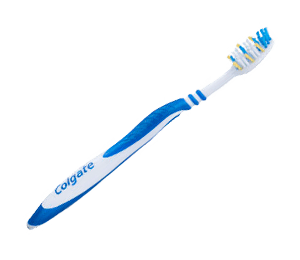
Description- Object is between 6-9 inches and roughly 1-2 inches in circumference. Made of a hard plastic material. One end has a flattened section measuring 1-1.5 inches with stiff bristles of varying colors and lengths. The other end has a rubber substance on the “bottom” of the item. Has no discernible temperature difference than the ambient air temperature.


Deduction- Item looks to be a tool of some sort. Possibly used for vanity. Could be used for very focused cleaning i.e. tile grout, in tight corners or inside of small necked bottles. Could also be used for hygiene purposes.


Speculation- I could see this item used by male and female people of all ages. Brushing small sections of hair like eyebrows.  I could see these individuals using this item to clean possibly teeth or under fingernails.  Based on the location of the item i could see this item being used to clean in very tight areas. Like getting in the grout between tiles in the shower or on the floor.  Could also clean the very tight locations on a toilet.


Questions-

Is there more than one use for this item?

Does the item need to be replaced often?

Has time and technology changed the usefulness or effectiveness of the item?


Colgate. “History Of Toothbrushes And Toothpastes.” History Of Toothbrushes And Toothpastes. N.p., n.d. Web. 22 Jan. 2016.

This article talks about the history of the toothbrush. The first toothbrushes date back to 3000 BC using frayed sticks. The Chinese are thought to have invented the first natural bristle design, with a bone or bamboo as the handle. This basic design didn’t change much until Du Pont invented nylon. The truly modern toothbrush was invented in 1938.


Wiegand, Annette and Burkhard, John and Eggmann, Florin and Attin, Thomas, “Brushing force of manual and sonic toothbrushes affects dental hard tissue abrasion,” Clinical Oral Investigations. Apr2013, Vol. 17 Issue 3, p815-822. 8p.

In this peer reviewed article, it has been found that if you are looking to do the least amount of damage to the enamel of your teeth, then you should use a electric sonic toothbrush. During the testing it was found that the most abrasive form of brushing is manually.


camanColgateWaveZigZag-ThumbProduct-Detail-Toothbrush-360-Enamel-Health

Filed Under: 02.1 Prownian Analysis, Group 4

Prownian Analysis

January 22, 2016 by elliejayo Leave a Comment

Prownian Analysis
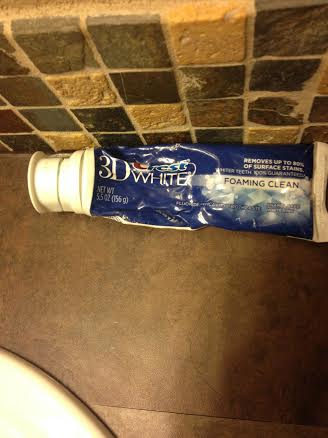
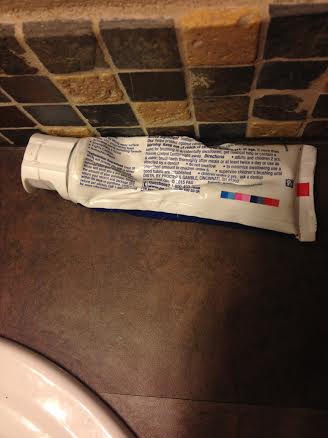
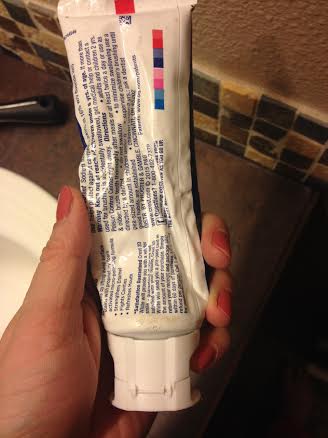
Description-This object is cold, and has a soft texture. This object is roughly 6 inches long and has a wrinkled look to it. The shatp 1

tp2

tp 3pe of this object has a rectangular body and a circular top. This object looks as though it is made out of a soft plastic.
Deduction-This product looks like it would be used for multiple different things. It looks as though people could use this for possible medical reasons. It looks as though it has something soft and a type of ointment inside of it. This could be used for medical reasons or hygiene purposes. This product looks like it belongs indoors and that a person would carry this with them possibly. Someone using this object could probably have it for a long time. It does not look like it would show wear and tear when someone is using it.
Speculate-Maybe this object would be used by someone who is a doctor or someone who could possibly be treating humans, or it may even be an animal product perhaps. This object could also be used for a household cleaner or used for something around the house rather than humans or animals.
Does anything about this product make one think that it is specifically for human use or could it be for animals as well?
What makes one think that this could be a medical assisting object, or hygiene?
Where could this product have possible came from?
Colgate. “History Of Toothbrushes And Toothpastes.” History Of Toothbrushes And Toothpastes. N.p., n.d. Web. 22 Jan. 2016.
It’s very possible that the history of this object could have rooted from China and India. Chinese were using toothpaste before the toothbrush was even around. Ox hoofs, egg shells, and ash were said to be some of the key ingredients in the first toothpastes. The author of this article helps readers understand three important things about this product. How, when, and why.
Basch, Corey H., Rodney Hammond, Alexis Guinta, Sonali Rajan, and Charles E. Basch. 2013. “Advertising of Toothpaste in Parenting Magazines”. Journal of Community Health : The Publication for Health Promotion and Disease Prevention. 38 (5): 911-914.
Unfortunately there is not a lot of history on tooth paste. Although this article does introduce some changes that have been made in toothpaste over the years. Its said to be more harmful today than it was 50 years ago. All the new chemicals that are being added to it are making this product unsafe. The author goes in depth to introduce the product and specific changes that it has made and how they have continuously altered. Many elements in this product are broke down by the author so one can really understand the properties of toothpaste.

Filed Under: 02.1 Prownian Analysis, Group 4

  • « Previous Page
  • 1
  • …
  • 14
  • 15
  • 16
  • 17
  • 18
  • 19
  • Next Page »

Students

Log in here.

Groups

Student Contributions

From the Professor

Copyright © 2026 · Minimum Pro Theme on Genesis Framework · WordPress · Log in