HIST 100: Engineering The Past

  • Home
  • Syllabus
  • Schedule
  • Blog

Module 4.1 Hagia Sophia

February 2, 2016 by Jessica F. 4 Comments

BASILICA

The term basilica (term is greek derived) refers to a large an important church that has been given special ceremonial rights by the Pope. Roman Catholic basilicas are Catholic pilgrimage sites, meaning they receive tens of millions of visitors per year. Below is a picture of St Peters Basilica in Vatican City. It is a major basilica of the Roman Catholic Church.

193px-Petersdom_von_Engelsburg_gesehen

Initially basilicas were used for business and had no religious function at all in Roman times. The oldest known basilicas date back to 184 BC in Rome.

Architecture plays a large part in what makes up a basilica. Christians adopted a variation of the basilica for worship. It usually consisted of a central nave (hallway) with an aisle on each side. An altar on a platform was placed at the front of the hall for the clergy to officiate services. In most basilicas, the central nave is taller than the aisles, forming a row of windows called a clerestory. Below is a basic drawing that shows the structural elements of a gothic basilica.

163px-Basilica_(architecture)_schematic_section

The reason this term is important to our topic is because Hagia Sophia is a former Christian Patriarchal Basilica (church) that is located in Istanbul, Turkey. Is was the largest cathedral until the early 1500’s. It was built in 537 and is labeled famously as having Byzantine Architecture because it was built during the reign of Constantinople during the Roman Empire. It is well know for its massive dome.

Timeline:

537-1453: Orthodox Cathedral

1453-1931: Mosque

1935-present day: Museum

Below is a picture of Hagia Sophia.

640px-Hagia_Sophia_Mars_2013

References:

https://en.wikipedia.org/wiki/Basilica

https://en.wikipedia.org/wiki/Hagia_Sophia
 

Filed Under: 04.1 Hagia Sophia, Group 1

Madrasa and the Hagia Sophia

February 2, 2016 by caitlynmoyle 2 Comments

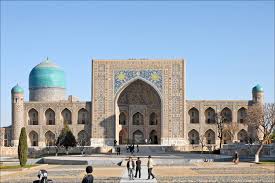
Madrasa is Arabic for any type of educational institution. This can mean secular or pertaining to any religion.  In the West, the word is used to refer to a specific type of religious school or college for the study of Islam, though it may not be the only subject studied. But, not all students in madrasas are Muslims. There is also a modern curriculum. The word madrasah derives from the triconsonantal Semitic root D-R-S ‘to learn, study’, through the wazn (form/stem) mafʻal(ah), meaning “a place where something is done”. Madrasah quite literally means “a place where learning and studying take place”. (https://en.wikipedia.org/wiki/Madrasa#Definition)

A photo of a madrasa

madrasaa

https://commons.wikimedia.org/wiki/File:La_madrasa_et_la_mosqu%C3%A9e_Tilla_Kari_du_Registan_(Samarcande,_Ouzb%C3%A9kistan)_(5630693152).jpg

The madrasa has recently developed a close relation with the Hagia Sophia. The Hagia Sophia is one of the most significant historical monuments in Turkey. It is a beautiful place that has been a “World Heritage Site” for a long time. The place is highly beloved by many people in Turkey. Recently, a new debate has come about with the Ministry of Culture’s plans to build a madrasa, a school of Islamic theology and law, in the Hagia Sophia’s courtyard. The source of the debate arose when the International Council on Monuments and Sites declared that once the madrasa is built, the status of the Hagia Sophia being a “World Heritage Site” will be reassessed and possibly removed. After the declaration, the Ministry of Culture began to reevaluate and have asked for an Environmental Impact Assessment Report. The Ministry plans to make their final decision regarding the madrasa plans after this report has been completed. But, because of the declaration to reassess the status of “World Heritage Site”, a rapidly growing resistance to the madrasa plans is assembling in Turkey.  (http://www.agos.com.tr/en/article/8493/new-madrasa-controversy-at-hagia-sophia)

Filed Under: 04.1 Hagia Sophia, Group 4

Hagia Sophia

February 2, 2016 by stevenhuber 3 Comments

Byzantine Architecture

The Hagia Sophia is renown for being one of the first masterpieces of Byzantine architecture. This style of architecture developed in the Byzantine Empire during the fifth century A.D. and is characterized by large, domed roofs that sit on top of square bases. Originally built as a way of remembering Roman architecture, the Byzantine architectural style went on to influence Medieval architecture throughout Europe and the Near East, as well as the Renaissance and Ottoman architectural styles that followed the Byzantine Empire’s collapse. It eventually gave way to Carolingian, Romanesque, and Gothic architecture in the West, while exerting a profound influence on early Islamic architecture in the East. The majority of structures that follow this style were built for religious purposes. Besides the large, domed roofs, Byzantine architecture is characterized by geometric complexity, large, round arches, and intricate glass mosaics decorating buildings’ interiors. In addition to stone, brick and plaster were used for the decoration of important public structures, while thin sheets of alabaster were placed over windows to softly illuminate the interior of a building. In order to place the large domes on top of square buildings, a constructive device known as a pendentive was used. Pendentives are shaped like triangular sections of a sphere and work by distributing the weight of the dome into four corners where the force can be received by piers. Overall, the Byzantine Empire was able to build off of previous architectural styles and incorporate new, innovative techniques of their own to develop a beautiful architectural style that is still admired to this day.


Sources:

https://en.wikipedia.org/wiki/Hagia_Sophia#Upper_Gallery

https://en.wikipedia.org/wiki/Byzantine_architecture

http://www.buffaloah.com/a/archsty/byz/

Filed Under: 04.1 Hagia Sophia, Group 4

  • « Previous Page
  • 1
  • …
  • 3
  • 4
  • 5
  • 6
  • Next Page »

Students

Log in here.

Groups

Student Contributions

From the Professor

Copyright © 2026 · Minimum Pro Theme on Genesis Framework · WordPress · Log in